For a Busan trip mixing metro and buses, start by considering a compatible transit card. For only an occasional metro journey, a QR single ticket avoids buying a card. A mobile day pass is worth comparing when you expect several covered metro journeys in one day. [3] [4] [2]
Choose from your actual route, not just the number of holiday days. Below are current adult fares and simple cost examples, checked against Busan Transportation Corporation on October 20, 2026. Children and other concession categories need their own fare check. [1]
| Option | Suitable for | Trade-off |
|---|---|---|
| Transit card [3] [4] | Repeated journeys and a metro/bus mix | Buy or bring a compatible card and maintain its balance. |
| QR single ticket [1] [3] | An occasional destination-specific metro ride | Adult fare is KRW 100 more than the corresponding card fare. |
| Mobile day pass [3] [2] | Several covered metro journeys on the valid day | App setup required; buses, Donghae Line and airport light rail excluded. |
Transit card: a starting point for a mixed transport day
The operator lists Tmoney, Hanaro and cashbee among cards eligible for its transfer system. That is useful when comparing a day involving both buses and metro. Transfer discounts have conditions: the published rule requires changing to another transport type within 30 minutes, and extra fares can apply. [4]
Buy cards at station machines or convenience stores and recharge at station machines. If you need a new card, check its purchase price and compatibility as well as the travel balance. [3]
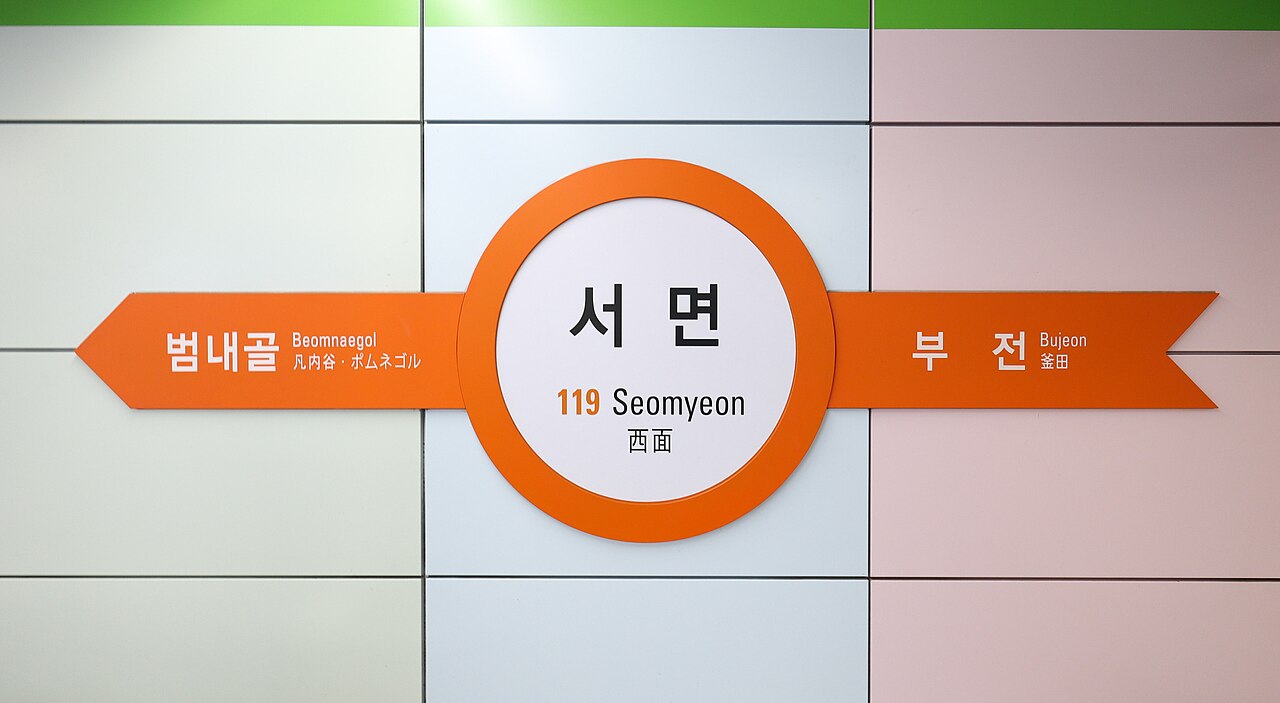
Seomyeon appears on both Lines 1 and 2. When planning a connection there, record your start and final destination rather than counting every train you board as a separate trip. Use the official route map to check the journey. [5]
Busan Transportation Corporation: urban rail/bus transfer rules
Busan Transportation Corporation: English line map
QR single ticket: straightforward for an occasional journey
At a station machine, select a single-use ticket and destination, confirm the fare and insert bills or coins. Scan the QR reader and retain the ticket until exit. [3]
Adult QR fares are KRW 1,700 for section 1 and KRW 1,900 for section 2. The corresponding transit-card or mobile pay-as-you-go fares are KRW 1,600 and KRW 1,800. For one isolated ride, weigh that KRW 100 difference against buying a new physical card. [1]
Busan Transportation Corporation: current English fares
When does the KRW 6,000 day pass make sense?
The adult mobile day pass costs KRW 6,000. Our calculation: three separate covered card-fare journeys cost KRW 4,800–5,400; four cost KRW 6,400–7,200. Thus four such journeys can make the pass cheaper on fares alone. This assumes an existing card, no concessions and no transfer discount; it excludes buying the card. [1] [2]
The adult three-day mobile pass is KRW 13,000. Compare that with the sum of your planned covered fares rather than buying it simply because your stay lasts three days. Verify the valid date and activation rules shown in the app with station staff before paying. [2]
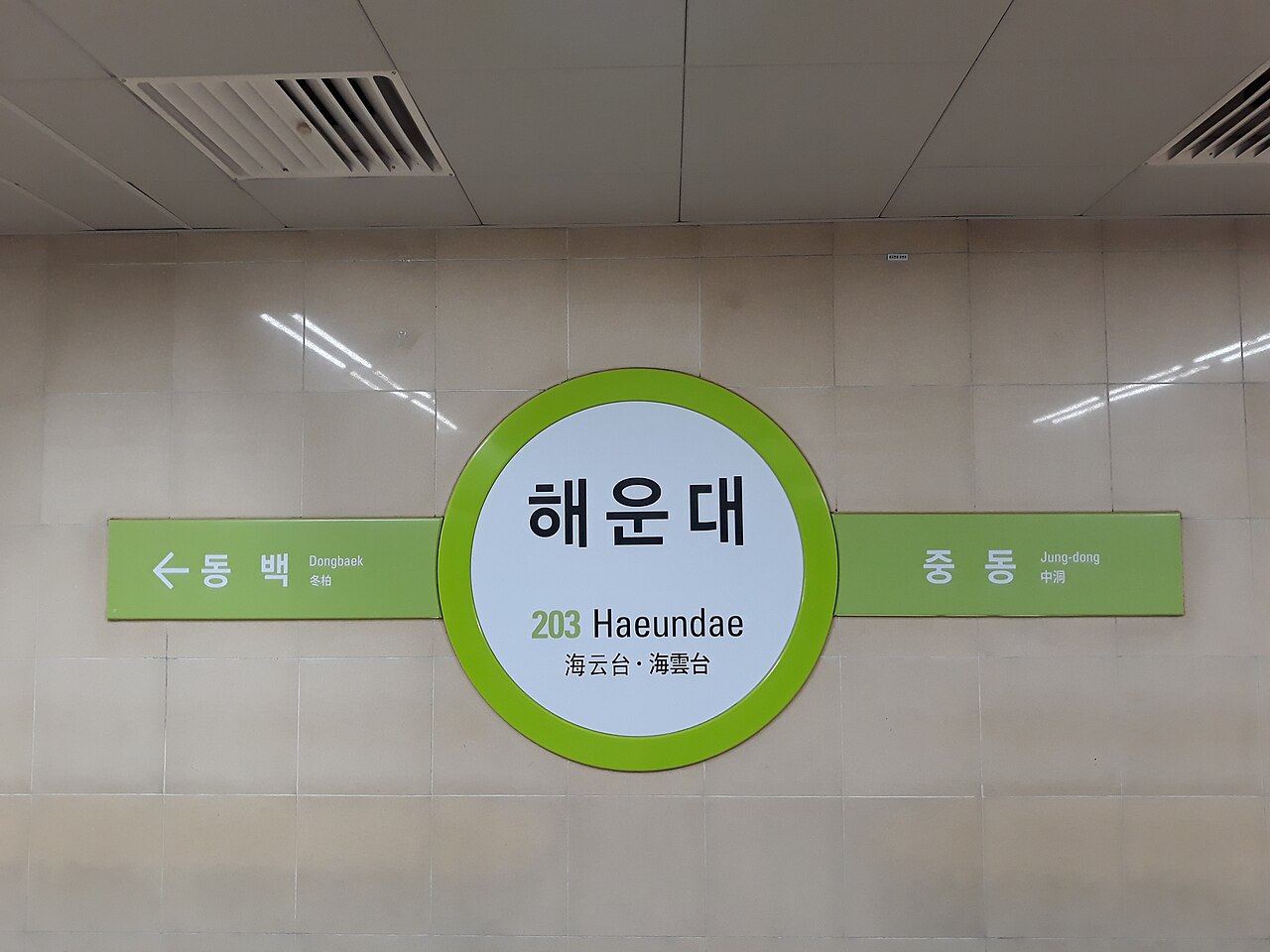
Haeundae is on Line 2. For a day centred there, list the journeys you will actually take; spending hours at one destination does not automatically create enough rides to justify a pass. The photograph is an archival station sign, not a ticket-machine screen. [5]
Busan Transportation Corporation: current Korean fare and pass rules
A metro pass does not cover the entire airport journey

The metro season-pass rules exclude buses, the Donghae Line and Busan–Gimhae Light Rail. The Sasang photograph shows the separate light-rail station, not a metro-pass boarding point. If your airport journey uses light rail, budget for that excluded leg separately. [2] [5]
Mark each leg of your day as metro, bus or another rail service before calculating savings. Keep the airport arrival decision separate from the metro-only pass comparison; the linked guide covers the route options. [2]
Plan the complete Gimhae Airport arrival route
Can visitors use the mobile pass?
The operator describes foreign-user access through email and an authentication code, without membership. Set up the app and confirm the purchase process before relying on a pass; we have not tested your device or payment method. [3]
Use a QR single as a fallback if setup fails. Physical-card balance refunds go through convenience stores, not the metro service; check the card issuer’s conditions. [3]
Busan Transportation Corporation: buying, recharging and using tickets
Choose the ticket after sketching your route
Write down where you start, where you finish and which journeys are actually covered. Compare pay-as-you-go costs with the pass, add excluded transport and any new-card cost, then choose. The useful question is what you will ride, not which product has the longest validity. [5] [2] [4]
Use the itinerary guide to group nearby stops before calculating. For the Haeundae tourist railway, use the separate comparison below rather than treating a coastal attraction booking as part of your ordinary metro ticket purchase. [5]
Group your journeys in a three-day Busan itinerary
Compare the Sky Capsule and Beach Train separately
Sources and verification dates
- [1] Busan Transportation Corporation: current English fares — consulted 2026-10-20
- [2] Busan Transportation Corporation: current Korean fare and pass rules — consulted 2026-10-20
- [3] Busan Transportation Corporation: buying, recharging and using tickets — consulted 2026-10-20
- [4] Busan Transportation Corporation: urban rail/bus transfer rules — consulted 2026-10-20
- [5] Busan Transportation Corporation: English line map — consulted 2026-10-20